 [영문]Cappelli_HBR_2008_Talent Management for the Twenty-First Century.pdf [영문]Cappelli_HBR_2008_Talent Management for the Twenty-First Century.pdf |
   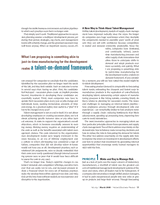 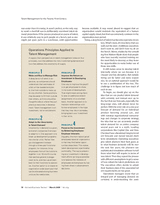 |
목차 How We Got Here A New Way to Think About Talent Management PRINCIPLE 1 Make and Buy to Manage Risk PRINCIPLE 2 Adapt to the Uncertainty in Talent Demand PRINCIPLE 3 Improve the Return on Investment in Developing Employees PRINCIPLE 4 Preserve the Incestment by Balancing Employee-Employer Interests 본문 distinct-and equally ineffective-camps. The first, and by far the most common, is to do nothing: anticipate no needs at all; make no plans for addressing them( rendering the term talent management meaningless). This reactive ap-preach relies overwhelmingly on outside hiring and has fal-tered now that the surplus of management talent has eroded. the second, common only among large, older co,panies, relies on complex and bureaucratic models from the 1950s for rorecasting and succession planning-legacy systems thea grew up in an era when business was highly predictable and that fail mow because they are inaccurate and costly in a more volatile environment. 하고 싶은 말 케이스 스터디 영문 입니다. 키워드 Talent Management for the Twenty-First Cent, Talent Management, Cappelli, 인사관리, 인적자원관리, HR, Case study |
2017년 6월 19일 월요일
영문Cappelli_HBR_2008_Talent Management for the Twenty-First Century
영문Cappelli_HBR_2008_Talent Management for the Twenty-First Century

피드 구독하기:
댓글 (Atom)
댓글 없음:
댓글 쓰기